

Presenting to the Emergency Room:
Mr. Abdul Rahman, a 57-year-old man, is brought to the emergency room by his son, who reports that his father has been struggling with a worsening cough and progressive shortness of breath over the past six days. Mr. Rahman, a seasoned carpet weaver, has gradually reduced his working hours due to declining stamina and recurrent health issues.
Patient’s Story and Background:
Mr. Rahman’s son reveals his father’s relentless dedication to his craft, often spending hours weaving despite the onset of a persistent cough and fever that began nearly a week ago. Over the past two days, Mr. Rahman has become increasingly lethargic, and his family has noted a bluish tint to his lips on exertion, prompting their visit to the ER. In his own words, Mr. Rahman explains that he’s been managing Type 2 diabetes and coronary artery disease (CAD) for several years. He underwent a percutaneous coronary intervention (PCI) following a heart attack eight years ago and has been on a regimen of metformin, aspirin, and atorvastatin since. He has been rather compliant with his medications but admits to having struggled with managing his blood sugar levels during the recent Ramadan, possibly due to altered meal timings and portions.
Clinical Examination:
Vital Signs:
BP: 155/90 mmHg
HR: 102 bpm
RR: 28 breaths/min
Temp: 38.7°C
SpO2: 86% on room air
Physical Examination:
Appears acutely ill and is using accessory muscles to breathe
Chest: Diffuse wheezing and crackles
Cardiovascular: Tachycardic, no additional heart sounds
Investigations:
Laboratory Results:
CBC: Hb 13.1 g/dL, WBC 14 x 10^9/L, Platelets 190 x 10^9/L
CRP: 56 mg/L
HbA1c: 9.2%
Radiological Findings:
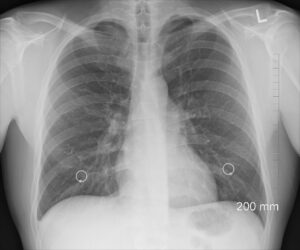
Chest X-ray: Bilateral lower lobe infiltrates
ECG: Sinus tachycardia, no acute ischemic changes
Discussion Questions:
1. What are the possible differential diagnoses based on the presenting symptoms and investigations?
2. Considering the patient’s comorbidities (Type 2 Diabetes and Coronary Artery Disease), what considerations should be made in the acute management of his presenting condition?
3. Considering the clinical presentation and laboratory results, what immediate management steps would you prioritize for Mr. Rahman? Discuss the possible challenges and strategies in managing the patient’s oxygenation and potential need for respiratory support.
4. Discuss the potential risk factors and complications that could arise in managing Mr. Rahman’s case, considering his diabetic status.

Responses